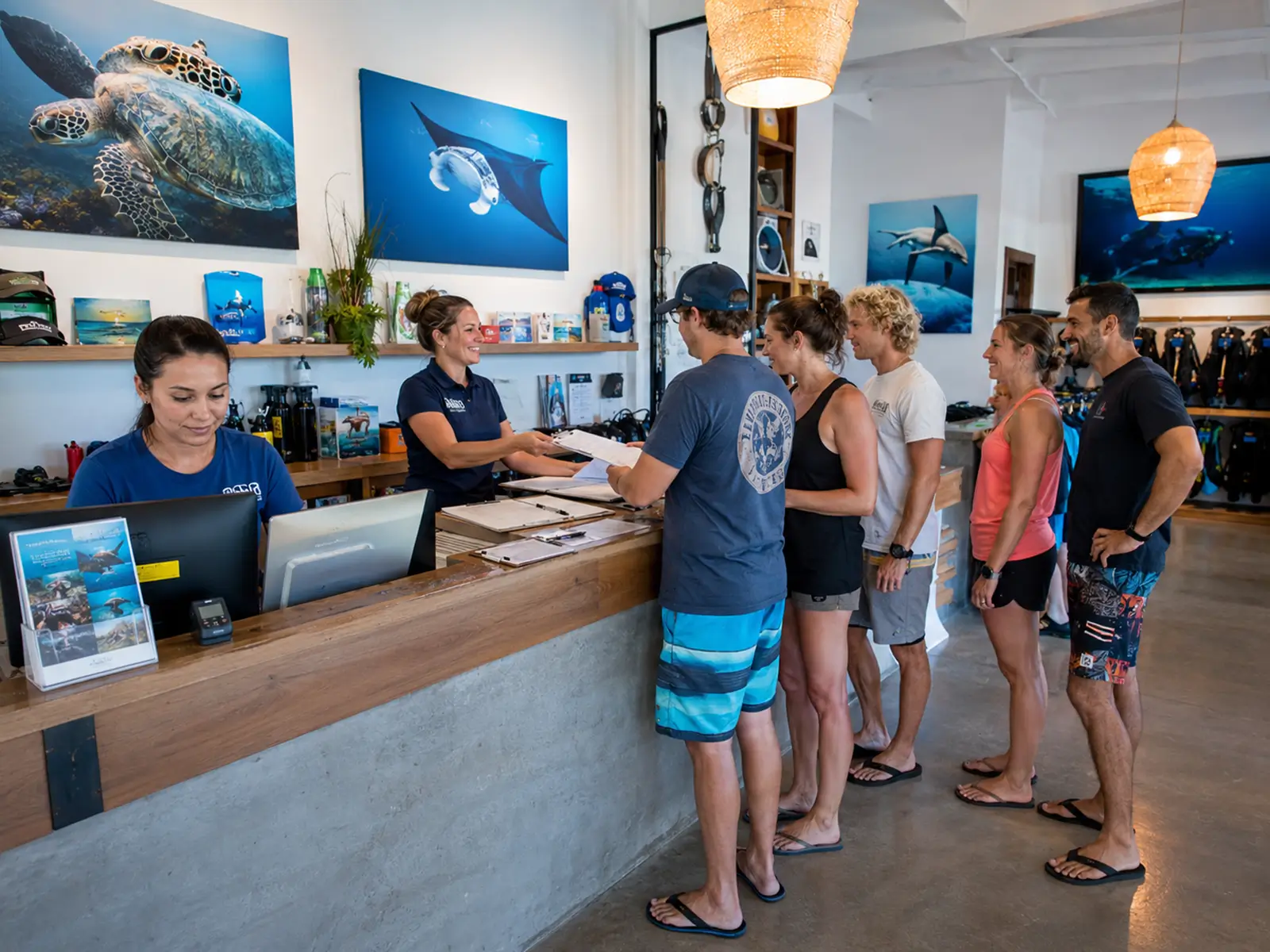
Dive Center Booking and Guest Management Workflow
A good dive experience starts before the customer arrives at the dive center.
It starts with the first enquiry, the first message, the first booking form and the first confirmation email.
Many operational problems in dive centers do not begin underwater. They begin earlier, with unclear bookings, missing customer information, unpaid reservations, wrong equipment sizes, forgotten medical forms, poor communication or unrealistic expectations.
A smooth guest flow makes the whole business easier to run.
It helps staff prepare equipment, plan groups, avoid overbooking, manage payments, reduce no-shows and give customers a more professional experience.
On "Dive Listings", buyers can compare dive centers and scuba businesses for sale, but understanding booking and guest flow helps buyers see how organized the operation really is.
If you want the broader daily operations guide, start with "run a dive center". This article focuses specifically on the customer journey from enquiry to follow-up.
1. Treat Every Enquiry as the Start of the Guest Experience
The guest experience starts when someone contacts the dive center.
That may happen through:
- Website form
- Online booking system
- Phone
- Social media
- Hotel partner
- Walk-in
- Travel agency
- Returning customer
- Referral
A fast, clear and friendly response builds trust.
A slow or confusing response can lose the booking, even if the dive center is good.
When replying to enquiries, staff should confirm:
- What activity the guest wants
- Number of people
- Certification level
- Last dive date
- Preferred date
- Language preference
- Equipment needs
- Medical or comfort concerns
- Hotel or pickup location
- Price and payment terms
- Cancellation policy
The goal is not only to answer the question. The goal is to collect enough information to guide the customer into the right activity.
2. Ask the Right Questions Before Confirming
Not every customer enquiry is ready to become a confirmed booking.
A dive center should ask the right questions before accepting the reservation.
For certified divers, ask:
- Certification level
- Last dive date
- Number of logged dives
- Comfort level
- Equipment needs
- Nitrox certification, if relevant
- Any medical concerns
- Preferred dive type
For beginners or try dives, ask:
- Swimming ability
- Previous scuba experience
- Age
- Health or medical concerns
- Comfort in the water
- Language preference
- Group size
For courses, ask:
- Desired certification
- Available dates
- E-learning status
- Previous experience
- Medical form status
- Schedule flexibility
These questions protect the customer and the business.
They also help staff avoid placing the wrong person into the wrong activity.
3. Confirm the Booking Clearly
A booking should never be vague.
Once the customer is accepted, send a clear confirmation.
The confirmation should include:
- Date
- Meeting time
- Expected finish time
- Activity booked
- Number of people
- Price
- What is included
- What is not included
- Equipment included or extra
- Meeting location
- Pickup details, if relevant
- What to bring
- Certification requirements
- Medical form or waiver requirements
- Payment status
- Cancellation policy
- Contact details
Customers should not have to guess what will happen.
A good confirmation reduces repeated questions and helps customers arrive prepared.
For tourist destinations, this is especially important because customers may be managing flights, hotels, rental cars, family plans and other excursions.
Clear communication makes the dive center feel professional before the customer even arrives.
4. Use Deposits or Prepayment Carefully
No-shows and last-minute cancellations can damage a dive center’s schedule.
A deposit or prepayment can protect the business.
Common options include:
- Full prepayment
- Partial deposit
- Card guarantee
- Pay on arrival
- Group deposit
- Course deposit
- Private trip deposit
The right model depends on the market.
For high-demand trips, small groups, boat dives or courses, deposits can be very useful. For walk-in-heavy destinations, full prepayment may not always be practical.
Whatever the policy, it should be clear before the booking is confirmed.
Customers should understand:
- How much they pay now
- When the balance is due
- What happens if they cancel
- What happens if weather changes
- What happens if the dive center cancels
- Whether refunds or rescheduling are possible
Payment confusion creates frustration. Clear payment rules protect both sides.

5. Collect Waivers and Medical Forms Early
Medical forms and waivers should not be left until the last minute whenever possible.
If a customer arrives and then reveals a medical issue, the dive center may need to delay, cancel or request medical clearance.
That creates stress for the customer and staff.
A better workflow is to send required forms before arrival.
This gives customers time to:
- Read the form properly
- Ask questions
- Get medical clearance if needed
- Understand risks
- Complete paperwork calmly
- Avoid surprises on the day
Digital waivers can make this easier, especially for busy centers.
The key point is simple: important paperwork should not become a bottleneck during morning check-in.
6. Check Certification Before the Dive Day
For certified dives, the dive center should confirm certification before the activity when possible.
This helps avoid problems on arrival.
Ask customers to provide:
- Certification agency
- Certification level
- Certification number or digital card
- Last dive date
- Relevant specialty certification, if needed
This is especially important for deeper dives, wreck dives, nitrox dives, night dives or advanced conditions.
A customer may believe they are qualified for a certain dive, but the staff must verify whether the activity is appropriate.
Certification checking should be part of the guest flow, not a rushed conversation five minutes before departure.
7. Collect Equipment Sizes in Advance
Equipment sizing is one of the easiest ways to improve daily operations.
Before the customer arrives, ask for:
- Height
- Weight
- Shoe size
- Wetsuit size, if known
- BCD size, if known
- Whether they bring any own gear
- Whether they need prescription mask support, if available
This helps staff prepare equipment before check-in.
It also reveals potential problems early.
For example, a very small child, very tall adult or customer needing uncommon boot sizes may require extra preparation.
Sizing in advance is especially useful for:
- Large groups
- Courses
- Boat trips
- Early departures
- Cruise passengers
- Hotel pickups
- Busy high-season days
Good sizing workflow saves time and reduces customer waiting.
8. Send a Pre-Arrival Reminder
A reminder message can reduce no-shows and confusion.
Send it the day before, or at a suitable time depending on the booking.
A good reminder includes:
- Meeting time
- Location
- Activity
- What to bring
- Certification reminder
- Medical form reminder
- Payment balance
- Pickup time
- Weather note, if relevant
- Contact number
- Parking or transport advice
The reminder does not need to be long.
Its purpose is to make sure the customer arrives at the right place, at the right time, with the right expectations.
This is especially useful in tourist areas where customers may be relaxed, distracted or unfamiliar with the destination.

9. Prepare the Daily Guest List
Every operating day should begin with a clear guest list.
The guest list should show:
- Customer names
- Activity booked
- Certification level
- Experience level
- Equipment needs
- Waiver status
- Payment status
- Pickup details
- Language preference
- Staff assignment
- Special notes
- Emergency contact, if required
- Group allocation
This list should be available to the front desk and the dive team.
A good guest list prevents repeated questions and last-minute confusion.
It also helps the team identify missing information before customers arrive.
The guest list is the bridge between booking administration and real daily operations.
10. Make Check-In Fast and Friendly
Check-in should feel organized, not stressful.
When customers arrive, staff should know who they are and what they booked.
A good check-in process confirms:
- Name
- Booking
- Payment
- Waiver or medical form
- Certification
- Equipment sizes
- Personal equipment brought by the customer
- Any last-minute concerns
- Meeting point for briefing
- Timing for departure
The customer should feel welcomed, not processed like a problem.
Friendly check-in is important because many customers may be nervous, especially beginners or people who have not dived for a long time.
A smooth check-in sets the tone for the whole dive day.
11. Avoid Repeating the Same Questions
Customers can become frustrated if they already provided information online and then must repeat everything again at the dive center.
Some confirmation is normal, but staff should avoid unnecessary repetition.
For example, if the customer already submitted shoe size, wetsuit size, certification level and waiver, the check-in should confirm those details quickly rather than start from zero.
This requires good internal systems.
The front desk, instructors and equipment staff should all have access to the information they need.
When information is collected but not used, the workflow is broken.
12. Group Customers Properly
Guest flow is not only about paperwork. It is also about placing customers into the right group.
Group planning should consider:
- Certification level
- Recent experience
- Confidence
- Language
- Air consumption
- Age
- Family groups
- Course requirements
- Private guide requests
- Dive site suitability
- Weather and sea conditions
A poor group match can damage the experience.
Experienced divers may feel held back. Beginners may feel rushed. A nervous customer may need extra support. A photographer may prefer a slower pace.
A good booking workflow should help staff plan groups before the dive day, not improvise everything at the last minute.

13. Manage Walk-Ins Without Breaking the Schedule
Walk-ins can be valuable, especially in tourist destinations.
But they can also create chaos if the dive center accepts them without checking capacity.
Before accepting a walk-in, staff should check:
- Staff availability
- Equipment availability
- Boat or vehicle capacity
- Customer experience level
- Medical or waiver requirements
- Payment
- Timing
- Whether the activity is suitable today
Walk-ins should not overload instructors or disrupt confirmed bookings.
A good front desk knows when to say yes, when to offer another time and when to decline for safety or quality reasons.
Not every possible sale is a good sale.
14. Handle No-Shows and Late Arrivals Professionally
No-shows and late arrivals happen.
A dive center should have a clear process.
For late arrivals:
- Try to contact the customer
- Know the latest possible arrival time
- Do not delay the whole group unfairly
- Offer rescheduling when possible
- Apply the cancellation policy consistently
For no-shows:
- Record the no-show
- Update payment status
- Release the space if appropriate
- Follow the stated policy
- Keep communication professional
The policy should be clear before booking.
Staff should not need to make emotional decisions under pressure every morning.
A clear policy protects the business and keeps the experience fair for other customers.
15. Keep Customers Updated When Plans Change
Dive plans can change because of weather, sea conditions, boat issues, staff illness or customer suitability.
When plans change, communication matters.
Customers should be told:
- What changed
- Why it changed
- What the new plan is
- Whether timing is affected
- Whether pricing changes
- Whether they can reschedule
- Whether they can cancel or receive credit, depending on policy
Most customers accept changes when they feel informed and respected.
Problems happen when they feel ignored, surprised or misled.
A dive center should explain changes calmly and clearly.
16. Record Customer Preferences and Notes
Good guest management includes useful customer notes.
These may include:
- Preferred language
- Equipment sizes
- Previous dives with the center
- Course progress
- Comfort level
- Air consumption
- Favorite dive sites
- Special requests
- Medical clearance status
- Repeat customer status
- Complaint history
- Feedback after the dive
These notes can improve future service.
For repeat customers, it feels professional when staff remember their preferences.
For course students, notes help instructors continue training smoothly.
Customer records should be handled responsibly and according to local data privacy rules.
 |
17. Payment Workflow Should Be Simple
Payment confusion can slow down the day and create awkward conversations.
A good payment workflow should clarify:
- Total price
- Deposit paid
- Balance due
- Payment method
- Extras
- Equipment rental charges
- Park fees
- Nitrox fees
- Course materials
- Refund or cancellation policy
The front desk should know who has paid and who has not.
Instructors and guides should not need to chase payments unless that is clearly part of their role.
A professional payment workflow protects cash flow and avoids uncomfortable misunderstandings.
18. After-Dive Flow Matters Too
Guest flow does not end when the customer comes out of the water.
After the dive, staff should manage:
- Equipment return
- Rinsing instructions
- Logbook stamps or digital confirmation
- Course paperwork
- Certification processing
- Photos or videos, if offered
- Payment balance
- Next dive offer
- Feedback
- Review request
- Transport back to hotel
- Follow-up message
This is a key moment for customer satisfaction.
A customer may have had a great dive but leave with a weaker impression if the after-dive process feels disorganized.
The end of the experience should feel as professional as the beginning.
19. Ask for Reviews at the Right Moment
Reviews matter for dive businesses.
The best time to ask is usually when the customer is happy, relaxed and finished with the activity.
A good review request should be simple and polite.
For example:
“Thank you for diving with us today. Reviews really help our small dive center. We would be grateful if you could share your experience.”
Do not pressure customers.
Do not ask staff to argue about reviews.
Just make the process easy.
A strong booking and guest flow can naturally lead to better reviews because customers feel cared for from start to finish.
20. Use the Workflow to Improve the Business
A booking and guest flow system should help the business learn.
Owners and managers should review:
- Where enquiries come from
- Which enquiries convert
- Which activities sell best
- Which days fill first
- Which customers cancel
- Which forms are often missing
- Which equipment sizes are most requested
- Which staff receive good feedback
- Which products create confusion
- Which customer questions repeat often
This information can improve pricing, scheduling, marketing, staff planning and equipment purchasing.
A good workflow is not only administrative.
It gives the owner better control over the business.
21. What Buyers Should Check
If you are buying a dive center, guest flow is one of the best ways to judge how organized the business is.
Ask the seller:
- How are bookings received?
- Is there an online booking system?
- Are waivers digital or paper-based?
- How are payments tracked?
- How are equipment sizes collected?
- How are customer notes stored?
- How are no-shows handled?
- How are groups planned?
- How are staff informed about daily bookings?
- How are reviews requested?
- Are customer records transferable?
- Does the system depend entirely on the owner?
A dive center with a clear booking and guest workflow is usually easier to take over.
A dive center that relies on memory, paper scraps and personal messages may need operational improvement after purchase.
Final Thoughts
Booking and guest flow are central to running a professional dive center.
A smooth workflow helps customers feel informed, welcomed and safe. It also helps staff prepare equipment, plan groups, collect payments, avoid confusion and deliver a better dive experience.
The best systems are not necessarily complicated.
They are clear, consistent and used by the whole team.
From first enquiry to post-dive follow-up, every step should reduce uncertainty for both the customer and the business.
For owners, improving guest flow can reduce stress and increase conversions.
For buyers, booking workflow shows whether the dive center is organized, transferable and ready to operate without depending completely on the current owner.
A good dive experience starts long before the dive begins.
Next Steps for Buyers and Operators
To understand the full daily workflow, start with "run a dive center".
To improve team roles and scheduling, read "staff and instructors".
For emergency planning and operational risk, review "safety procedures".
If rental equipment is part of your guest flow, read "dive equipment rental fleet".
If you are ready to compare real opportunities, browse current "dive centers for sale" on "Dive Listings".
You can also explore more guides in our "Dive Center Operations" section.