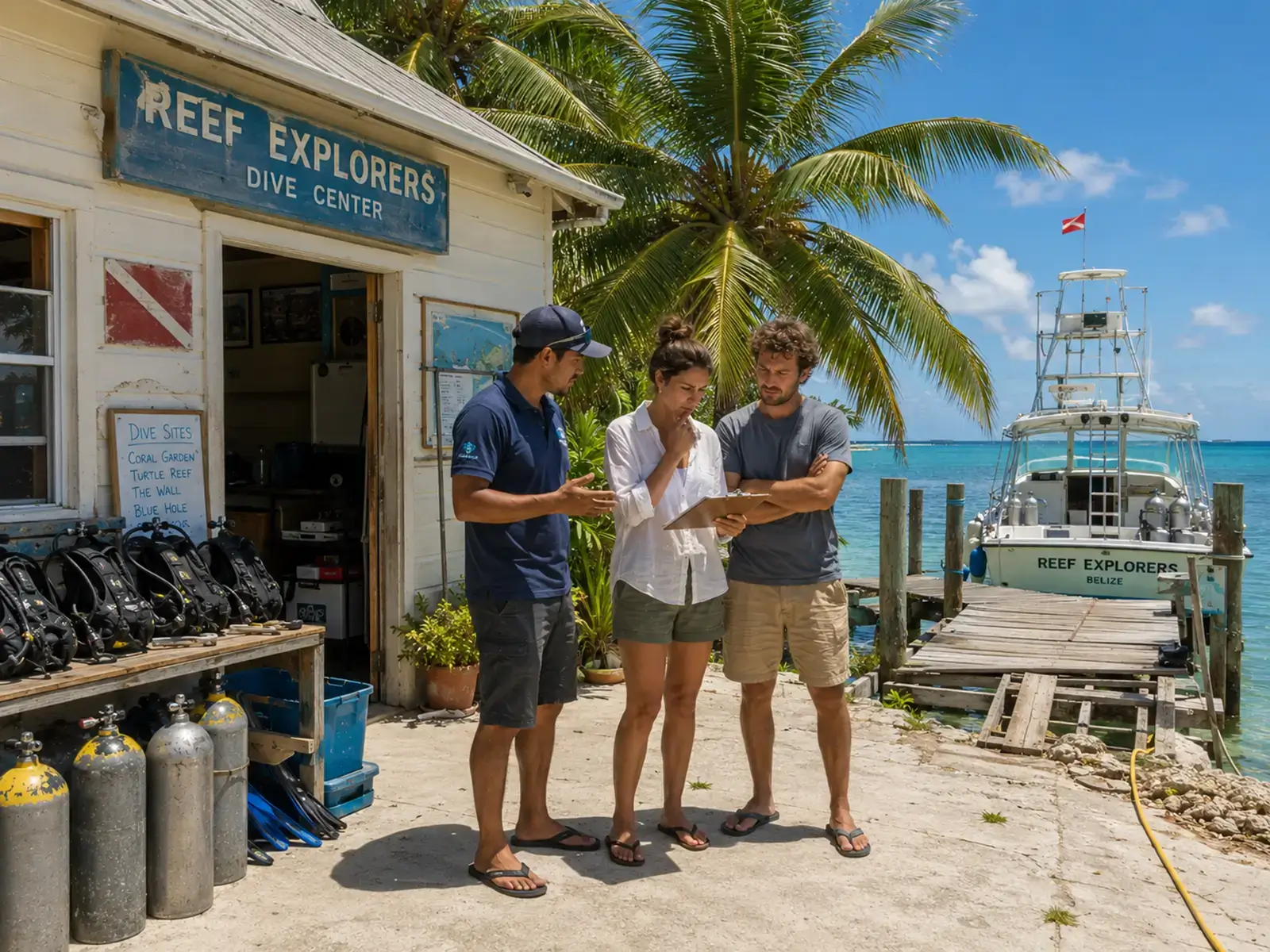
Buying a Dive Business Abroad: Licenses, Leases and Local Risks
Buying a dive business abroad can be one of the most exciting ways to enter the scuba diving industry. Instead of starting from zero in your home country, you may find an established dive center in a popular destination with warm water, tourism demand and an existing customer base.
For many buyers, this is the dream: owning a dive center in Spain, Mexico, Thailand, Egypt, Indonesia, the Caribbean or another well-known diving destination.
But buying abroad is not the same as buying locally.
You are not only buying a business. You are entering another legal system, tax system, language, culture and tourism market. What looks simple in a listing can become complicated if you do not understand local rules.
On "Dive Listings", buyers can compare dive businesses in different destinations, but every foreign buyer should take extra care before making an offer.
If you are still at the early stage, start with our guide on "how to buy a dive center". If you are specifically looking for a ready-to-operate opportunity, you may also want to read about buying a "turnkey dive business".
This guide focuses on the most important issues when buying a dive business abroad.
1. Check Whether Foreigners Can Own the Business
Before looking deeply at any deal, check whether foreigners are allowed to own that type of business in the country.
In some destinations, foreign ownership is straightforward. In others, there may be restrictions, local partner requirements or special company structures.
You may need to understand:
- Whether foreigners can own 100% of the company
- Whether a local partner is required
- Whether certain permits must be held by a resident
- Whether a local director is needed
- Whether the business can be owned personally or through a company
- Whether the country has special rules for tourism activities
This is not something to guess.
A dive center may be operating legally under the current owner, but that does not automatically mean you can take it over in the same way.
Before paying a deposit, speak with a local lawyer who understands foreign investment and small business transfers.
2. Understand Visa and Residency Rules
Buying a dive business does not always give you the automatic right to live and work in the country.
This is one of the biggest mistakes foreign buyers can make.
You need to check whether you can legally:
- Live in the country
- Work in your own business
- Manage staff
- Teach diving
- Receive income locally
- Stay longer than a tourist visa allows
- Apply for residency as a business owner
In some countries, you may need a business visa, investor visa, work permit, residency permit or local company structure before operating the business yourself.
If you plan to be only an investor and hire a local manager, the rules may be different. If you plan to work daily in the dive center, teach courses or manage operations in person, the rules may be stricter.
Do not assume that buying the business solves your immigration situation. Treat residency and work rights as a separate part of the buying process.
 |
3. Licenses May Not Transfer Automatically
A dive center abroad may have local permits, tourism licenses, boat permissions or environmental approvals. But the key question is whether those permissions can transfer to you.
Some licenses may stay with the company. Others may be connected to the current owner, a local manager, a specific address, a boat, a lease or a professional qualification.
Before buying, ask a local advisor to confirm:
- Which licenses are required
- Who currently holds them
- Whether they transfer with the company
- Whether they must be renewed after sale
- Whether a foreign buyer can hold them
- Whether local qualifications are required
- Whether approvals are linked to the premises or boat
This is especially important in protected marine areas, national parks, harbors, beaches and resort zones.
A business may look profitable, but if you cannot legally continue operations after the sale, the deal can become a serious problem.
4. Review the Lease Like a Local Buyer
When buying abroad, the premises can be just as important as the business itself.
Many dive centers are located near beaches, marinas, hotels or tourist streets. These locations can be valuable, but only if the lease is secure and transferable.
You need to understand the local lease rules.
Check:
- How long the lease remains
- Whether it can be transferred to a foreign buyer
- Whether the landlord must approve the transfer
- Whether rent can increase after the sale
- Whether the lease allows dive operations
- Whether storage, compressor use or retail sales are allowed
- Whether the business has legal signage rights
- Whether the landlord can terminate the agreement early
In some countries, lease contracts are strongly protected. In others, they may be much weaker than foreign buyers expect.
Do not rely only on a translated summary. Have the full lease reviewed by a local professional before making a serious commitment.
5. Be Careful With Informal Agreements
In many tourism destinations, businesses operate partly through personal relationships.
A dive center may have informal agreements with hotels, boat owners, landlords, instructors, drivers, local guides or travel agents.
These relationships can be useful, but they may not transfer automatically to a new foreign owner.
Ask yourself:
- Are key agreements written or only verbal?
- Are commissions clearly documented?
- Will local partners continue after the sale?
- Does the seller have personal relationships that you cannot replace?
- Are there any exclusivity arrangements?
- Are there unpaid commissions or old disputes?
For example, a hotel may send customers because it trusts the current owner personally. A boat captain may offer a good rate because of a long friendship. A landlord may tolerate certain business activities because of an old arrangement.
After the sale, those relationships may change.
A foreign buyer should never assume that informal local agreements will continue without confirmation.
6. Understand the Local Tax System
Tax rules can change the real value of a business purchase.
Before buying abroad, you should understand how the transaction and future operation will be taxed.
Questions to ask include:
- Is the sale structured as an asset sale or company sale?
- Is VAT, sales tax or transfer tax payable?
- Are there local business taxes?
- How are salaries taxed?
- How are owner profits taxed?
- Are there withholding taxes for foreign owners?
- Can profits be transferred abroad?
- What accounting records are required?
- Are there unpaid tax liabilities?
Tax issues are especially important if you buy the company rather than selected assets. In some situations, you may inherit old obligations if the legal structure is not checked properly.
Use a local accountant before signing. Do not wait until after the purchase to understand the tax position.
For budgeting, combine local tax advice with your full "dive center buying costs" so you know the real financial commitment.
7. Banking and Payments Can Be Complicated
Foreign buyers often underestimate banking and payment issues.
Before buying, check whether you can open a local business bank account, receive card payments, pay staff, pay taxes and connect booking systems.
You may need:
- Local company documents
- Tax number
- Residency or identification number
- Local director details
- Proof of address
- Anti-money-laundering checks
- Payment processor approval
Also check how the business currently receives payments.
A dive center may use cash, bank transfer, card terminal, online booking systems, travel agency payments or foreign payment processors.
If you cannot continue using the same payment setup after the sale, the transition may be harder than expected.
Payment access should be solved before takeover, not after customers are already trying to book.
8. Language and Culture Affect the Deal
Buying abroad is not only a legal transaction. It is also a communication challenge.
Contracts, licenses, tax letters, staff discussions, landlord negotiations and supplier agreements may all happen in a language you do not fully understand.
This can create risk.
Use professional translation where needed, especially for:
- Purchase agreement
- Lease agreement
- Licenses
- Tax documents
- Staff contracts
- Boat documents
- Insurance policies
Also consider local business culture.
In some places, deals move slowly. In others, informal relationships matter more. Some sellers may avoid direct negative answers. Some landlords may expect face-to-face meetings. Some staff may be nervous about foreign ownership.
A good buyer does not need to know everything immediately, but should respect local ways of doing business.
9. Visit the Business Before Buying
For an overseas purchase, visiting the business in person is strongly recommended.
Photos, videos and online calls are useful, but they do not show everything.
During a visit, you can see:
- How busy the area really is
- How customers arrive
- How staff interact with guests
- How the premises feel
- How close the business is to hotels, beaches or marina access
- How competitors operate nearby
- How organized daily operations are
- Whether the local market matches the seller’s description
Try to visit during a normal operating period, not only during a perfectly prepared seller tour.
Walk around the area. Visit competitors. Check local prices. Speak with local professionals. Look at how tourism actually works in that destination.
A short visit can reveal things that no listing description will show.
10. Plan a Longer Handover
When buying a dive business abroad, handover is even more important than in a local purchase.
You may need help understanding local procedures, contacts, suppliers, authorities, seasonality and customer expectations.
A good handover may include:
- Introductions to landlord and local partners
- Staff meetings
- Supplier introductions
- Booking system training
- Explanation of local permits
- Local accountant and lawyer contacts
- Bank and payment process support
- Customer communication templates
- Explanation of seasonal demand
- Support after completion
For an overseas buyer, a few days may not be enough.
If possible, negotiate a transition period where the seller remains available for several weeks or months, at least part-time or remotely.
This can make the difference between a smooth takeover and a stressful first season.
11. Know When to Walk Away
Not every overseas opportunity is worth the risk.
You should be very careful if:
- Foreign ownership is unclear
- Residency or work rights are impossible
- Licenses cannot transfer
- The lease is weak or ending soon
- The seller refuses local professional review
- Documents are only verbal or incomplete
- Tax liabilities are unclear
- Digital assets cannot be transferred
- Staff and partners may leave immediately
- The seller pressures you to pay before proper checks
A beautiful location should not blind you to legal or operational problems.
There will always be another opportunity. It is better to walk away from a risky deal than to buy a business you cannot legally or practically operate.
Final Thoughts
Buying a dive business abroad can be a strong opportunity, but it requires more preparation than buying locally.
The main challenge is not only understanding the business. It is understanding the country around the business.
Foreign buyers must check ownership rules, visas, licenses, lease terms, taxes, banking, language issues, local agreements and the handover process before committing.
A dive center in a beautiful destination may look like a dream, but the deal must work legally, financially and practically.
The best overseas purchase is one where the buyer understands not only the business itself, but also the local rules that allow that business to operate.
Take your time, use local professionals and never rely only on promises.
A well-checked overseas dive business can become a rewarding investment. A poorly checked one can become expensive, stressful and difficult to manage from day one.
Next Steps for Buyers
If you are still learning the buying process, start with our full guide on "how to buy a dive center".
If you want a ready-to-operate opportunity, read our guide to buying a "turnkey dive business".
Before making an offer abroad, calculate the full "dive center buying costs", including legal advice, local taxes, travel, residency, working capital and post-purchase investment.
If you are ready to compare opportunities, browse current "dive centers for sale" on "Dive Listings".
You can also explore more guides in our "Buying a Dive Business" section.
 |