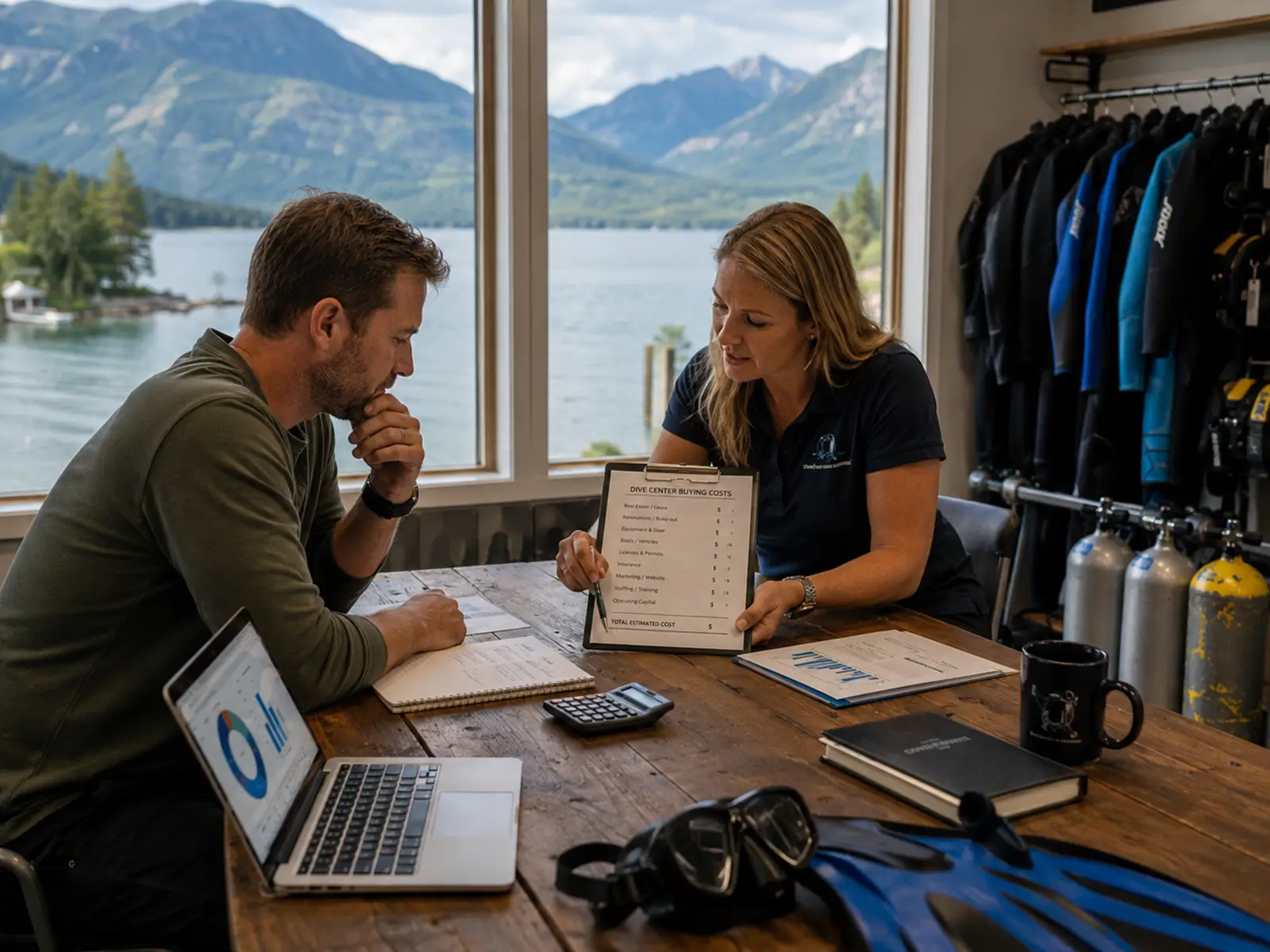
Dive Center Buying Costs: What Buyers Should Budget For
When buyers look at a dive center for sale, the first number they usually notice is the asking price.
But the asking price is not the full cost of buying a dive business.
A dive center may look affordable at first, but the real investment can be higher once you include legal fees, lease deposits, equipment replacement, compressor servicing, boat repairs, staff costs, marketing, insurance, licenses and working capital.
On "Dive Listings", buyers can compare different "dive centers for sale", but every buyer should calculate the full budget before making an offer.
If you are still learning the buying process, start with our full guide on "how to buy a dive center". If you are looking at an existing ready-to-operate business, you may also want to read about buying a "turnkey dive business".
This guide explains the main costs buyers should consider before purchasing a dive center, dive shop or scuba diving business.
1. The Asking Price
The asking price is the amount the seller wants for the business.
It may include different things depending on the deal, such as:
- Business name
- Equipment
- Customer base
- Website and online accounts
- Lease rights
- Boats or vehicles
- Compressor
- Retail stock
- Local partnerships
- Training agency status
- Goodwill and reputation
Two dive centers with the same asking price may have very different value.
One may include boats, compressor, strong revenue and a secure lease. Another may include mostly basic equipment and a rented shop with limited history.
Before comparing prices, always check what is included and what is not included.
The asking price is only the starting point. The real question is:
How much money will I need in total to buy, take over and operate this business safely?
2. Legal and Professional Fees
Professional advice is not a cost to avoid. It is part of buying properly.
Depending on the country and the structure of the deal, you may need help from:
- Lawyer
- Accountant
- Tax advisor
- Business broker
- Boat surveyor
- Equipment technician
- Compressor technician
- Translator
Legal and professional fees can vary widely by country and deal complexity.
A simple asset purchase may be cheaper to review than a company purchase with employees, debts, boats, lease agreements and local permits.
If you are "buying a dive business abroad", professional costs may be higher because you may need local legal advice, translations, tax support and help understanding local business rules.
Do not wait until the end of the process to budget for these costs. Include them from the beginning.
3. Taxes and Transaction Costs
Business purchases can involve taxes and transaction fees.
These may include:
- VAT or sales tax
- Transfer tax
- Stamp duty
- Company registration fees
- Notary fees
- Broker commission
- Bank transfer fees
- Currency exchange costs
- Local government fees
The exact costs depend on the country, the type of transaction and whether you are buying company shares or selected assets.
This is one reason why the same purchase price can lead to different total costs in different countries.
Before signing anything, ask a local accountant or tax advisor what taxes and fees may apply to the purchase.
4. Lease Deposit and Premises Costs
Many dive centers operate from rented premises.
After buying the business, you may need money for:
- Lease deposit
- Advance rent
- Lease transfer fee
- Landlord approval costs
- Basic renovation
- Signage
- Storage improvements
- Compressor room changes
- Retail display improvements
- Office setup
- Security system
- Utilities setup
A good location can be very valuable, but only if the lease terms are clear and affordable.
If rent is high, rising soon or payable in advance, your first-year budget must reflect that.
Also check whether the landlord requires a new deposit from the buyer, even if the seller already paid one.
5. Equipment Replacement and Servicing
Dive equipment is one of the most visible parts of the business, but buyers often underestimate its real cost.
Even if equipment is included in the sale, you may need to service, replace or upgrade some of it soon after takeover.
Common equipment costs include:
- Regulator servicing
- BCD repairs or replacement
- Wetsuit replacement
- Tank inspections
- Valve servicing
- Mask, fin and snorkel replacement
- Dive computer replacement
- Oxygen kit maintenance
- First aid equipment updates
- Storage and drying improvements
Do not value equipment only by the seller’s original purchase price.
Used rental equipment should be valued based on condition, age, service history and how much life it still has left.
If a large part of the equipment needs replacement soon, the asking price should reflect that.
 |
6. Compressor and Filling System Costs
The compressor is one of the most important and expensive systems in many dive centers.
After purchase, you may need to budget for:
- Compressor service
- Filter changes
- Air quality testing
- Repairs
- Spare parts
- Technician inspection
- Electrical work
- Ventilation improvements
- Tank filling station upgrades
- Nitrox system maintenance, if applicable
A compressor that looks fine from the outside may still need expensive work.
If the business depends on filling its own tanks, compressor reliability is not optional. A compressor problem can stop daily operations and force you to outsource fills or cancel dives.
Before buying, get a realistic estimate of any compressor work needed in the first year.
7. Boat and Vehicle Costs
If boats or vehicles are included, they can add value to the business. They can also add major expenses.
Possible boat costs include:
- Engine servicing
- Hull repairs
- Safety equipment
- Insurance
- Mooring or marina fees
- Fuel
- Annual inspections
- Registration fees
- Navigation equipment
- Trailer maintenance
- Skipper costs
Possible vehicle costs include:
- Insurance
- Roadworthiness inspections
- Repairs
- Fuel
- Registration
- Branding
- Maintenance
A dive center with boats may be more attractive, but it usually has higher running costs than a shore-based operation.
When reviewing a boat-based business, ask how much the boats cost to operate each month, not only what they are worth as assets.
8. Staff and Payroll Costs
Staff costs can be one of the biggest ongoing expenses after buying a dive center.
Your budget may need to include:
- Instructor salaries
- Divemaster wages
- Boat crew
- Front-desk staff
- Freelance instructor payments
- Payroll taxes
- Social security contributions
- Staff insurance
- Training costs
- Uniforms
- Seasonal hiring
- Manager salary
You also need to decide whether you will work in the business yourself or hire people to replace the current owner’s role.
If the seller currently works full-time without taking a normal salary, the profit may look better than it really is.
After takeover, you may need to pay someone for that same work.
That should be included in your financial planning.
 |
9. Insurance and Safety Costs
A dive business needs proper insurance and safety systems.
Depending on the location and type of operation, you may need:
- Public liability insurance
- Professional liability insurance
- Boat insurance
- Vehicle insurance
- Staff insurance
- Property insurance
- Equipment insurance
- Accident coverage
- Emergency oxygen equipment
- First aid supplies
- Safety signage
- Emergency procedure updates
Insurance costs can vary significantly depending on the country, activities offered, number of customers, boats, staff and training agency requirements.
Do not assume the seller’s current insurance can simply continue under your ownership.
Ask for quotes before completing the purchase.
10. Marketing and Website Costs
After buying a dive center, you will probably need to invest in marketing.
Even if the business has a website and reviews, the new owner may need to refresh the brand, improve booking conversion or attract new customers.
Possible marketing costs include:
- Website updates
- SEO work
- New photos
- New videos
- Google Ads
- Social media ads
- Email marketing
- Blog content
- Local partnerships
- Printed materials
- Signage
- Booking platform commissions
A business with strong online visibility may need less immediate marketing spend. A business with an outdated website, weak photos or poor booking process may need more.
If you are buying through "Dive Listings", your goal is not only to purchase the business, but to keep bookings coming after the takeover.
Marketing should be part of your first-year budget, not something you think about later.
11. Working Capital
Working capital is the money you need to keep the business running after purchase.
This is one of the most important costs buyers forget.
You may need cash for:
- Rent
- Salaries
- Insurance
- Fuel
- Repairs
- Stock
- Marketing
- Utilities
- Supplier payments
- Taxes
- Low-season expenses
- Unexpected problems
A dive center may not generate enough cash immediately after takeover, especially if you buy before low season, need time to rebuild marketing or must make repairs before operating fully.
Working capital gives you breathing room.
Buying the business with no reserve cash is risky, even if the asking price looks affordable.
12. Travel and Relocation Costs
If you are buying a dive business away from home, include travel and relocation costs.
These may include:
- Flights
- Accommodation
- Local transport
- Multiple inspection visits
- Professional meetings
- Visa or residency applications
- Moving costs
- Temporary housing
- Family relocation
- Language support
- Local administration costs
For overseas buyers, these expenses can be significant.
They may not be part of the business price, but they are part of your real investment.
This is especially important when "buying a dive business abroad", where several visits may be needed before and after completion.
13. First-Year Improvement Budget
Most buyers will want to improve something after takeover.
Even a good business may need updates.
Common first-year improvements include:
- New rental equipment
- Better website
- New booking system
- Fresh branding
- Shop renovation
- Staff training
- New course packages
- Better signage
- New marketing materials
- Updated safety procedures
- Retail stock improvement
- Boat upgrades
These improvements can help grow the business, but they cost money before they create results.
Do not spend your entire budget on the purchase price. Keep money available for improvements that protect or grow revenue.
14. Emergency Reserve
Every buyer should keep an emergency reserve.
Dive businesses can face unexpected costs, such as:
- Compressor failure
- Boat engine repairs
- Storm damage
- Equipment replacement
- Staff leaving
- Slow season
- Cancelled bookings
- Insurance changes
- Legal or permit delays
- Website problems
- Unexpected tax bills
An emergency reserve protects you from having to make desperate decisions after purchase.
The amount depends on the size and risk of the business, but the principle is simple:
Do not buy a dive center with your entire available budget.
Leave enough cash to handle problems calmly.
 |
15. The Real Cost Formula
A simple way to think about the real cost is:
Total investment = asking price + transaction costs + takeover costs + working capital + emergency reserve
This is more useful than looking at the asking price alone.
For example, a lower-priced business may become expensive if it needs new equipment, compressor work, marketing and legal fixes.
A higher-priced business may be better value if it includes strong assets, stable revenue, good systems and lower immediate investment needs.
The cheapest dive center is not always the best deal.
The best deal is the one where the total investment makes sense compared with the real earning potential and risk.
Final Thoughts
Buying a dive center is not only about paying the seller’s asking price.
The real budget should include legal advice, taxes, lease costs, equipment, compressor servicing, boats, staff, insurance, marketing, working capital and emergency reserves.
A buyer who only budgets for the purchase price may run out of money during the most important period: the first months after takeover.
A smart buyer calculates the full cost before making an offer.
This does not mean you should avoid dive businesses that need investment. Some businesses are good opportunities exactly because they can be improved.
But the price must reflect the work and money required.
Before buying, ask yourself:
Can I afford not only to buy this dive center, but also to operate and improve it during the first year?
If the answer is yes, you can make a much more confident decision.
Next Steps for Buyers
If you are still learning the full buying process, start with our complete guide on "how to buy a dive center".
If you want a ready-to-operate opportunity, read our guide to buying a "turnkey dive business".
If you are considering an overseas purchase, review the key risks of "buying a dive business abroad" before making an offer.
If you are ready to compare opportunities, browse current "dive centers for sale" on "Dive Listings".
You can also explore more guides in our "Buying a Dive Business" section.
 |