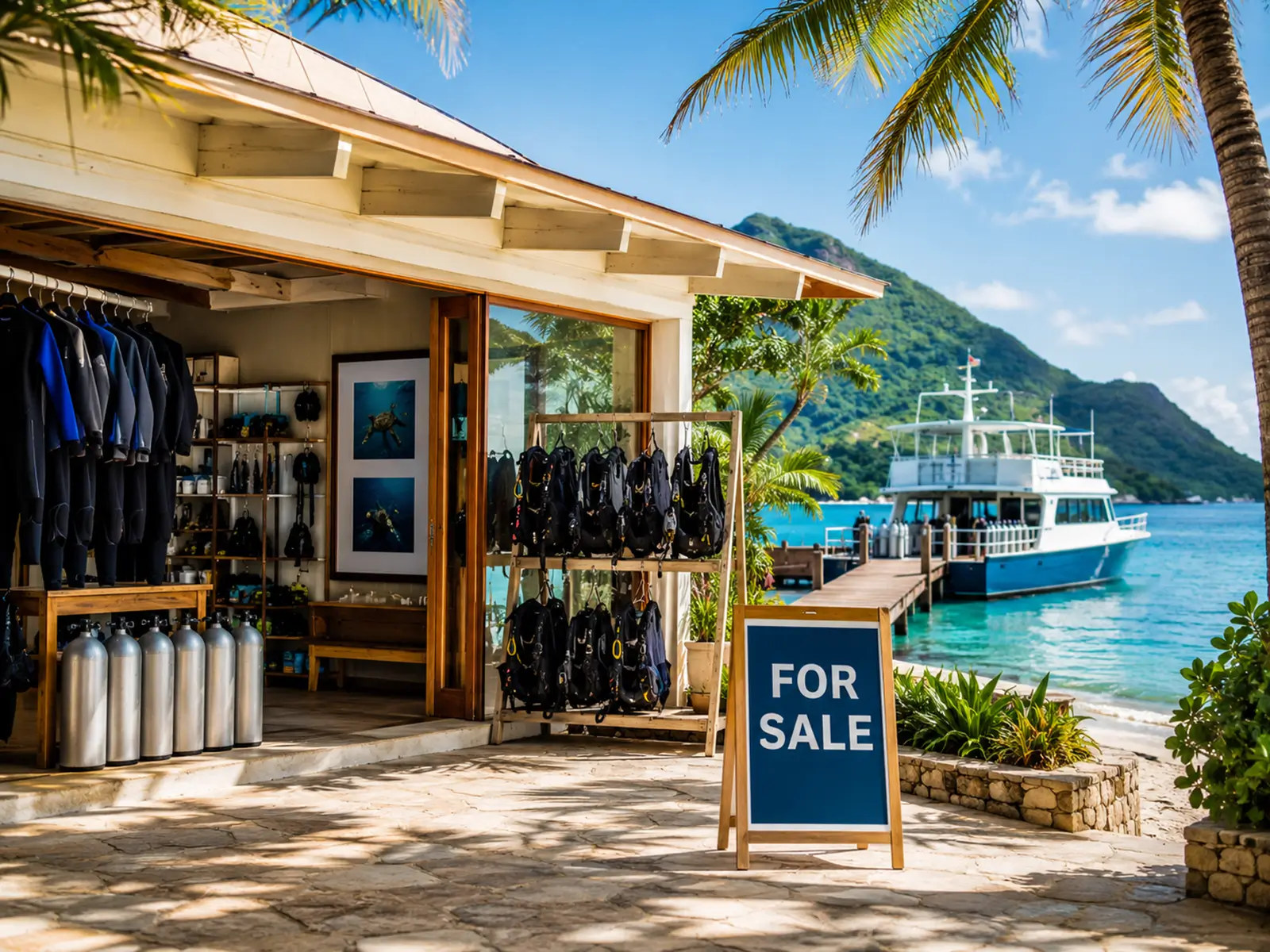
Dive Center for Sale: How to Find and Buy the Right Scuba Business
Searching for a dive center for sale can be exciting.
For many buyers, it is not only a business decision. It is also a lifestyle decision. Owning a dive center can mean working near the ocean, meeting divers from around the world, building a team, teaching new students and turning a passion for scuba diving into a real business.
But buying a dive center is still a serious investment.
A beautiful location, tropical photos and attractive dive sites are not enough. Buyers need to understand what is actually included in the sale, how the business earns money, what risks exist and whether the operation can continue successfully after takeover.
On "Dive Listings", buyers can browse "dive centers for sale" and compare scuba business opportunities worldwide. This guide explains what to look for when reviewing a dive center for sale and how to think like a serious buyer before making an enquiry or offer.
1. Start With the Type of Dive Center
Not every dive center for sale is the same.
Some businesses are small owner-operated dive shops. Others are larger operations with boats, instructors, rental fleets, courses, hotel partnerships and strong online bookings.
Before comparing prices, understand the type of business being offered.
A dive center may focus on:
- Beginner try dives
- Certified fun dives
- Dive courses
- Boat diving
- Shore diving
- Snorkeling trips
- Liveaboard support
- Technical diving
- Equipment rental
- Retail sales
- Compressor and tank filling
- Resort or hotel guests
- Local resident divers
The right opportunity depends on your skills, budget and goals.
A small dive center may be easier to manage but have limited growth. A larger operation may offer stronger revenue but require more staff, systems and working capital.
When you see a dive center for sale, do not only ask, “Is this a good business?”
Ask:
Is this the right type of dive business for me?
2. Location Can Make or Break the Business
Location is one of the most important factors when buying a dive center.
A good location can bring visibility, tourist demand, access to dive sites and strong partnerships. A weak location can make customer acquisition harder, even if the diving itself is good.
Review the location carefully:
- Is it in a known diving destination?
- Is it close to hotels, resorts or tourist areas?
- Is there easy access to dive sites?
- Is boat access available?
- Is the business visible from the street?
- Is parking available?
- Are customers mostly tourists, locals or repeat divers?
- Is the destination seasonal or year-round?
- Are there many competitors nearby?
- Is the area growing or declining?
A dive center for sale in a famous destination may have stronger demand, but it may also face more competition and higher costs.
A less obvious destination may be cheaper and have growth potential, but it may require stronger marketing.
The best location is not always the most beautiful one. It is the one that supports real customer demand and sustainable operations.

3. Understand What Is Included in the Sale
A dive center listing should clearly explain what is included.
Never assume that everything visible in photos is part of the sale.
Ask whether the sale includes:
- Business name
- Website and domain
- Social media accounts
- Google Business Profile
- Customer database
- Booking system
- Rental equipment
- Tanks
- Compressor
- Boats
- Vehicles
- Retail stock
- Furniture and fixtures
- Training materials
- Licenses or permits
- Lease agreement
- Staff contracts
- Hotel partnerships
- Supplier relationships
- Existing bookings
A dive center for sale may include only assets, or it may include a full operating business.
There is a big difference.
Buying equipment and a shop space is not the same as buying a profitable, established dive operation with customers, reviews, staff and systems.
A clear asset list protects both buyer and seller.
4. Review the Business Model
A good dive center should have a clear way of making money.
Before making an offer, understand where revenue comes from.
Common revenue sources include:
- Guided dives
- Dive courses
- Try dives
- Equipment rental
- Snorkeling tours
- Boat trips
- Private guiding
- Retail sales
- Tank filling
- Nitrox
- Liveaboard referrals
- Hotel partner bookings
- Online direct bookings
- Group trips
Some dive centers rely mostly on beginner activities. Others depend on certified divers, courses, local residents or hotel referrals.
This matters because different business models have different risks.
For example, a business based mostly on tourists may be seasonal. A training-focused dive center may depend heavily on instructors. A boat-based operation may have higher fuel, crew and maintenance costs.
A serious buyer should understand not only how much the business earns, but how it earns it.
5. Check the Financial Performance
A dive center for sale should be supported by financial information.
Photos and descriptions can create interest, but numbers create confidence.
Ask for information such as:
- Annual revenue
- Monthly revenue
- Profit
- Main expenses
- Staff costs
- Rent or lease costs
- Boat costs
- Equipment maintenance
- Insurance
- Marketing costs
- Booking commissions
- Seasonality
- Owner salary or owner workload
- Recent growth or decline
Revenue alone is not enough.
A dive center may have high sales but low profit if costs are heavy. Another center may have lower revenue but better margins and lower risk.
Buyers should pay attention to real earning power.
For a deeper financial guide, read "revenue vs profit in dive business valuation" and "dive center buying costs".
 |
6. Look at the Lease or Premises
Many dive centers operate from rented premises.
That makes the lease very important.
A strong dive center can lose value if the buyer cannot continue using the same location.
Check:
- Lease length
- Monthly rent
- Renewal options
- Transferability to buyer
- Deposit requirements
- Restrictions on business activity
- Storage rights
- Compressor permission
- Signage rights
- Parking or customer access
- Boat or vehicle storage
- Any planned rent increases
Do not assume the lease will transfer automatically.
The landlord may need to approve the buyer. The lease terms may change. The current owner may have a personal agreement that is not guaranteed after sale.
For a dive center for sale, premises security can strongly affect value.
7. Licenses and Permits Matter
A dive center must be legally able to operate.
This can include different requirements depending on the country and destination.
Check whether the business has the necessary:
- Business registration
- Tourism permits
- Activity licenses
- Boat permissions
- Insurance
- Staff certifications
- Compressor or fill station compliance
- Local operating approvals
- Marine park permits
- Retail permissions
- Training agency status
- Environmental permissions, if required
Some licenses may transfer. Others may not.
This is especially important when "buying a dive business abroad".
A dive center for sale may look attractive, but if the buyer cannot legally continue the same activities, the value is much lower.
Always verify legal requirements locally before completion.
8. Equipment Can Add Value or Create Costs
Rental equipment is a major part of many dive centers.
It can support courses, guided dives and customer convenience. But it can also create hidden replacement costs.
Review:
- Regulators
- BCDs
- Wetsuits
- Tanks
- Fins
- Masks
- Boots
- Weights
- Dive computers
- Storage systems
- Repair tools
- Compressor
- Fill station
- Boats or vehicles
Do not value equipment based only on original purchase price.
Used dive equipment should be judged by condition, service history, age, safety, sizing and remaining useful life.
A large rental fleet may look impressive, but if regulators need service, wetsuits are worn and tanks are out of inspection, the buyer may face immediate costs.
For more detail, read "dive equipment rental fleet", "buy used dive equipment" and "compressors and fill stations".
 |
9. Staff and Instructors Can Be a Major Strength
A dive center is built around people.
Instructors, divemasters, front desk staff, boat crew and managers affect the customer experience every day.
When reviewing a dive center for sale, ask:
- Who currently works in the business?
- Are they employees, freelancers or seasonal staff?
- Are contracts in place?
- Are qualifications current?
- Which languages do they speak?
- Who handles bookings?
- Who teaches courses?
- Who guides dives?
- Who operates the compressor?
- Who drives the boat or vehicle?
- Are key staff likely to stay after the sale?
A strong team can make the handover easier.
A business that depends completely on the current owner may be harder to take over.
If the seller is the main instructor, manager, marketer, boat operator and customer contact, the buyer must understand what will happen after the owner leaves.
For a deeper operational view, read "staff and instructors".
10. Online Reputation Is Part of the Value
Many customers choose a dive center based on reviews before they ever visit the shop.
That means online reputation has real business value.
Check:
- Google reviews
- TripAdvisor reviews, if relevant
- Booking platform reviews
- Social media comments
- Review recency
- Review quality
- Repeated customer complaints
- Staff names mentioned positively
- Safety and equipment comments
- Customer photos
- Response style from the business
A dive center for sale with strong recent reviews may be more attractive because it already has trust in the market.
A center with weak or outdated reviews may still be an opportunity, but the buyer should understand that reputation improvement may be needed.
Reviews are not only marketing. They show how customers experience the business.
11. Customer Sources Should Be Clear
A buyer needs to know where customers come from.
A dive center may receive bookings from:
- Google search
- Google Maps
- Website enquiries
- Walk-ins
- Hotel partners
- Resorts
- Travel agencies
- Social media
- Repeat customers
- Local residents
- Dive clubs
- Online marketplaces
- Paid advertising
A strong business usually has several customer channels.
A risky business may depend too much on one hotel, one agency, one instructor or one paid ad campaign.
Ask the seller:
- Which channels bring the most bookings?
- Are customer sources tracked?
- How many bookings are direct?
- How many are commission-based?
- Are hotel partnerships written or informal?
- Are repeat customers important?
- Does the business own its website and Google profile?
Customer acquisition is one of the most important parts of a dive center’s value.
For more detail, read "get more dive customers" and "local SEO for dive centers".
|
12. Compare the Asking Price With the Real Business
The asking price of a dive center for sale should match the reality of the business.
A seller may price the business based on emotion, years of work or the cost of equipment. A buyer should look at profit, assets, risk and future investment.
Consider:
- Profit history
- Asset value
- Equipment condition
- Lease security
- Staff stability
- Online reputation
- Customer sources
- Location strength
- Licenses and permits
- Growth potential
- Owner dependence
- Replacement costs
- Working capital needed
A good opportunity should have a price that makes sense when compared with the business performance and risk.
For valuation guidance, read "how to value a dive center" and "what increases dive business value".
13. Be Careful With “Lifestyle Business” Pricing
Many dive centers are described as lifestyle businesses.
That can be true. But buyers should be careful.
A lifestyle business can still be profitable, organized and valuable. But sometimes the phrase is used when the business does not produce strong financial returns.
Ask yourself:
- Does the business pay the owner properly?
- Can it support staff costs?
- Is there enough profit after expenses?
- Is the buyer buying a job or an investment?
- Can the business grow?
- Is the lifestyle worth the workload?
- Does the price match the earnings?
There is nothing wrong with buying a lifestyle business.
But the buyer should understand exactly what that means financially.
A dream location does not replace realistic numbers.
14. Understand the Handover
A good handover can protect the buyer after purchase.
A dive center for sale should ideally include a transition period where the seller helps the buyer understand the business.
A handover may include:
- Staff introductions
- Supplier introductions
- Hotel partner introductions
- Training on booking systems
- Customer database explanation
- Equipment review
- Dive site orientation
- Local procedure explanation
- License and permit guidance
- Marketing account transfer
- Website and email transfer
- Google profile transfer
- Future booking explanation
The more complex the business, the more important the handover becomes.
A buyer should not only ask what is included in the sale.
They should ask how the business will be transferred.
 |
15. Look for Realistic Growth Opportunities
A dive center for sale may already be stable, or it may have room to grow.
Growth opportunities can include:
- Better website
- Improved local SEO
- More Google reviews
- Stronger hotel partnerships
- New dive packages
- More courses
- Better social media
- Online booking system
- Private guiding
- Snorkeling products
- Equipment rental expansion
- Boat trips
- Local resident programs
- Repeat customer follow-up
- Better pricing
- Improved photos and branding
But growth potential should be realistic.
A seller may say the business “could easily double revenue,” but the buyer should ask why that has not already happened.
Real growth opportunities are specific, practical and supported by market demand.
16. Red Flags When Reviewing a Dive Center for Sale
Not every opportunity is right.
Be careful when:
- Financial information is vague
- The asset list is unclear
- The lease cannot transfer
- Equipment condition is poor
- Licenses are uncertain
- Staff are likely to leave
- Reviews show repeated problems
- The seller avoids direct questions
- The asking price is based mainly on emotion
- The business depends only on the owner
- Customer sources are not tracked
- Hotel partnerships are informal and personal
- The compressor has no service records
- The business has no clear handover plan
One red flag does not always mean you should walk away.
But several red flags together should make you cautious.
A professional seller should be able to explain the business clearly.
17. What a Strong Listing Should Show
A good dive center for sale listing should give buyers enough information to decide whether to enquire.
A strong listing may include:
- Location overview
- Business type
- Main services
- What is included
- Equipment summary
- Staff overview
- Customer sources
- Lease situation
- Reason for sale
- Asking price
- Growth opportunities
- Photos
- Handover support
- Confidentiality notes, if needed
The listing does not need to reveal every private detail publicly.
But it should build confidence.
A vague listing may still receive enquiries, but serious buyers are more likely to respond to clear, professional information.
18. Why Use a Specialist Marketplace
A general business marketplace may not understand the scuba industry.
Dive businesses have specific assets, risks and buyer questions.
A specialist platform helps buyers search within the right category and compare relevant opportunities.
On "Dive Listings", buyers can browse categories such as:
- "dive centers for sale"
- "dive boats for sale"
- "liveaboards for sale"
- "dive equipment for sale"
- "dive business partnerships"
This makes the search more focused.
A buyer looking for a dive center for sale does not want to scroll through restaurants, shops and unrelated businesses. They want scuba-related opportunities with the right context.
19. Before You Make an Enquiry
Before contacting the seller, prepare your questions.
Good first questions include:
- What exactly is included in the sale?
- Why is the owner selling?
- Is the business currently operating?
- Are financial records available?
- Is the lease transferable?
- Are licenses and permits transferable?
- Is equipment included?
- Are staff willing to stay?
- How do customers find the business?
- Are there existing bookings?
- What handover support is offered?
- Is the price negotiable?
- What information is available after NDA, if needed?
A serious enquiry should be clear and professional.
Sellers are more likely to respond well to buyers who show real intent and understand the business.
20. Before You Make an Offer
Before making an offer on a dive center for sale, review the full picture.
You should understand:
- The real profit
- The asset condition
- The lease risk
- Legal requirements
- Staff situation
- Customer sources
- Online reputation
- Equipment replacement needs
- Working capital required
- Handover process
- Growth potential
- Buyer responsibilities after takeover
Do not make an offer based only on emotion.
A beautiful dive center in a tropical destination can still be a poor investment if the numbers, documents or operations do not work.
The best purchase is one where the lifestyle, business model and financial reality all make sense together.
Final Thoughts
Finding a dive center for sale is the beginning of the process, not the end.
A strong opportunity should offer more than attractive photos and a good location. It should have clear assets, realistic financials, secure premises, usable equipment, proper licenses, a stable team, good reviews, reliable customer sources and a practical handover plan.
For buyers, the goal is not just to buy any dive center.
The goal is to buy the right dive center.
One that matches your budget, skills, lifestyle, risk tolerance and long-term business goals.
On "Dive Listings", buyers can browse "dive centers for sale" and compare scuba business opportunities worldwide. Before making an offer, take time to understand what is included, what needs improvement and what the business can realistically become under new ownership.
A good dive center for sale should not only look exciting.
It should make sense as a business.
Next Steps for Buyers
To understand the full buying process, read "how to buy a dive center".
If you want a ready-to-operate opportunity, review "turnkey dive business".
If you are buying in another country, read "buying a dive business abroad".
Before planning your budget, check "dive center buying costs".
To understand price and value, review "how to value a dive center".
If you are ready to compare opportunities, browse current "dive centers for sale" on "Dive Listings".
 |