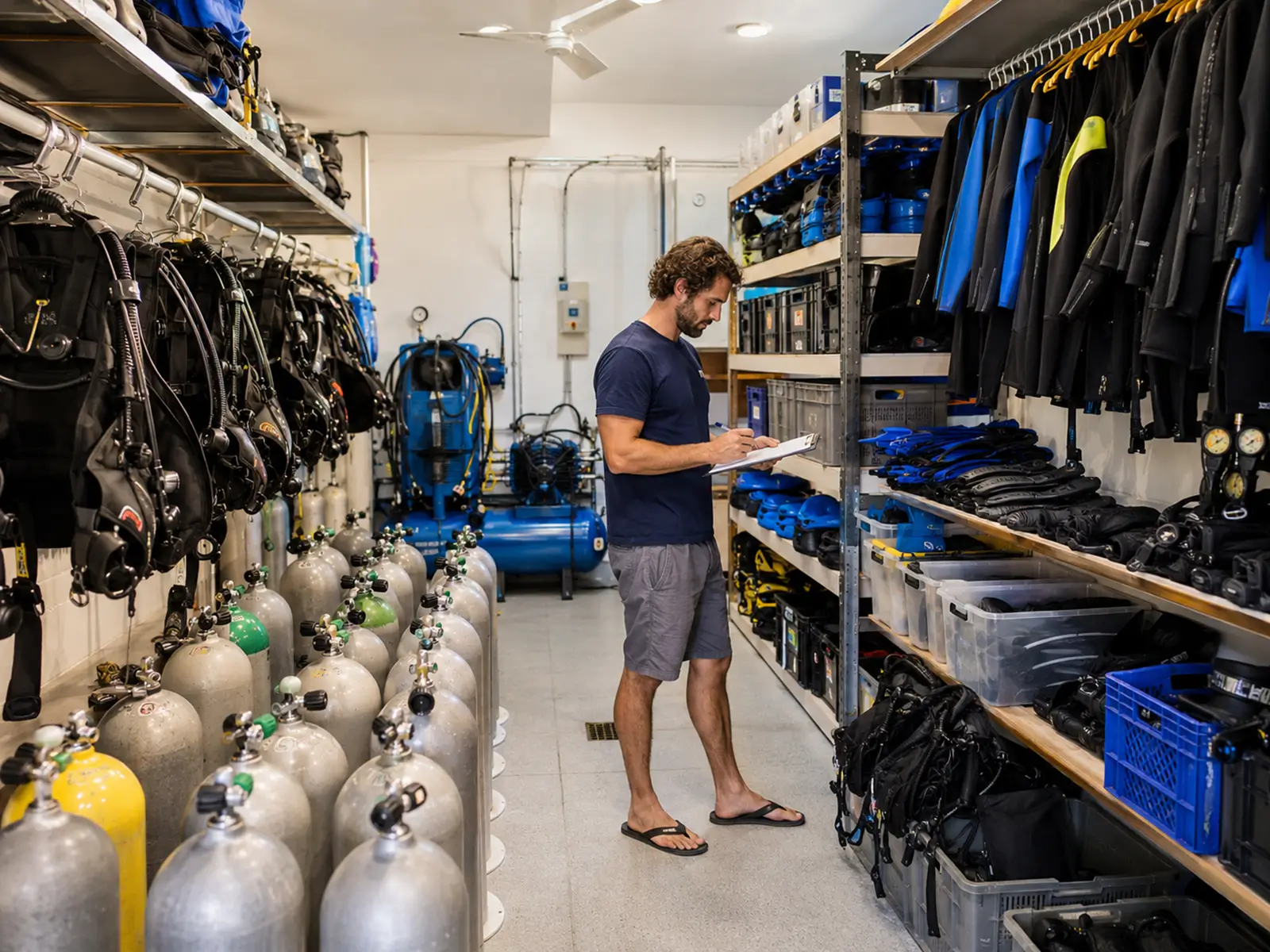
How Equipment, Boats and Compressors Affect Dive Center Value
Equipment and assets are an important part of dive business valuation.
A dive center may include rental gear, tanks, compressors, boats, engines, vehicles, retail stock, tools, office equipment, digital assets and brand materials. These items can make the business more valuable because they allow a buyer to continue operating without starting from zero.
But assets can also be overvalued.
A seller may remember what the equipment originally cost. A buyer will care more about what the equipment is worth today, how long it will last, whether it is safe, and whether it will need replacement soon after takeover.
On "Dive Listings", buyers and sellers can compare different dive business opportunities, but asset value should always be reviewed carefully before agreeing on a price.
If you are new to valuation, start with "how to value a dive center". This article focuses specifically on how physical and digital assets affect dive center value.
1. Asset Value Is Not the Same as Purchase Price
One of the most common valuation mistakes is using original purchase price as today’s value.
A regulator bought several years ago is not worth the same amount today. A wetsuit used by many rental customers has limited remaining life. A boat may have high original value but need expensive engine work. A compressor may be essential, but its real value depends on age, condition and maintenance history.
When valuing assets, think in three ways:
Replacement cost — what it would cost to buy a similar item today.
Resale value — what the item could realistically sell for used.
Operating value — how useful the item is for running the business.
For a dive center valuation, operating value often matters most. An asset is more valuable if it is safe, working, needed and ready to use.
2. Create a Clear Asset Inventory
Before valuing equipment, sellers should prepare a clear asset inventory.
This list should show what is included in the sale and what is excluded.
A useful inventory may include:
- Regulators
- BCDs
- Wetsuits
- Drysuits
- Masks, fins and snorkels
- Tanks
- Valves
- Dive computers
- Weights
- Oxygen equipment
- First aid equipment
- Compressor
- Filling panel
- Nitrox system
- Boats
- Engines
- Vehicles
- Retail stock
- Tools and spare parts
- Office equipment
- Website and digital accounts
For each major item, include age, condition, service history and ownership status.
This makes the valuation more realistic and helps buyers understand the business faster.
If the asset list is unclear, buyers may reduce their offer because they do not know exactly what they are getting.
 |
3. Owned, Leased or Financed Assets
Not every asset used by a dive center is actually owned by the business.
This is very important.
Some items may be:
- Fully owned
- Leased
- Financed
- Rented
- Shared with another business
- Personally owned by the seller
- Owned by a partner or landlord
For example, the dive boat may not belong to the company. The compressor may be leased. The vehicle may be under finance. The premises may include equipment that belongs to the landlord. Some computers or phones may be personal items.
Only assets that can legally transfer to the buyer should be included in the valuation.
If an asset is important to daily operations but not included in the sale, the buyer may need to budget for a replacement. That can reduce the business value.
4. Rental Dive Equipment
Rental dive equipment is one of the most visible parts of a dive center.
It can add value when it is clean, complete, well-maintained and suitable for the customer base.
Important items include:
- Regulators
- BCDs
- Wetsuits
- Drysuits, if used
- Masks
- Fins
- Snorkels
- Dive computers
- Weights and belts
When valuing rental gear, consider:
- Age
- Condition
- Service records
- Quantity
- Size range
- Brand quality
- Safety standards
- Remaining useful life
- Replacement needs
A full set of rental gear is useful only if it is suitable for real customers. For example, a dive center serving beginners and families needs a wide range of wetsuit and BCD sizes. A technical diving center may need a very different equipment profile.
Old rental equipment may still have some value, but it should not be valued like new stock.
5. Tanks and Valves
Tanks are essential assets in many dive centers, but their value depends heavily on inspection status and condition.
Buyers should check:
- Number of tanks
- Tank sizes
- Steel or aluminum
- Valve types
- Visual inspection dates
- Hydrostatic test dates
- Condition inside and outside
- Oxygen cleaning status, if needed
- Local testing requirements
A large number of tanks can add value if they are in date and ready to use.
But tanks that are out of test, damaged, heavily corroded or near the end of useful life may create cost rather than value.
For sellers, clear tank records can support a stronger valuation. For buyers, missing tank documentation should be treated carefully.

6. Compressor and Filling System
The compressor is one of the most important assets in many dive businesses.
It can also be one of the most expensive to repair or replace.
When valuing a compressor, look at:
- Make and model
- Age
- Operating hours
- Service history
- Filter change records
- Air quality test results
- Maintenance schedule
- Spare parts availability
- Technician support
- Installation quality
- Ventilation
- Filling panel condition
- Nitrox system, if applicable
A well-maintained compressor with clear records can add meaningful value.
A compressor with unknown history, missing service records or possible technical issues may reduce value because the buyer may need an inspection, repair or replacement.
Do not value a compressor only because it is present. Value it because it is safe, documented and reliable.
7. Boats and Engines
Boats can significantly increase the value of a dive business, especially if the operation depends on boat dives.
But boats also bring risk and ongoing costs.
When valuing boats, check:
- Boat ownership
- Registration documents
- Engine age and condition
- Service records
- Hull condition
- Safety equipment
- Passenger capacity
- Fuel consumption
- Mooring or marina costs
- Insurance
- Required inspections
- Local operating permissions
- Skipper requirements
- Outstanding finance
A boat-based dive center may look more valuable because of the boat, but the buyer must understand the real cost of keeping it operational.
An older boat with engine problems can quickly become a major expense.
A reliable boat with good documentation, safe access, proper equipment and secure mooring can support a higher valuation.
8. Vehicles and Trailers
Vehicles and trailers may be important for moving customers, tanks, equipment or boats.
Their value depends on condition, legal status and usefulness.
Check:
- Ownership documents
- Registration
- Insurance
- Inspection status
- Mileage
- Maintenance history
- Branding
- Load capacity
- Trailer condition
- Roadworthiness
- Transferability
A vehicle used daily for tank transport may be more important than it appears in the listing.
But an old vehicle needing repairs should not be valued highly just because it is included in the sale.
The buyer should ask whether the vehicle is essential to operations and whether it will need replacement soon.

9. Retail Stock
Some dive businesses include retail stock.
This may include masks, fins, snorkels, wetsuits, dive computers, accessories, spare parts, clothing or branded merchandise.
Retail stock should be valued carefully.
Important questions include:
- Is the stock current?
- Is it slow-moving?
- Is it seasonal?
- Is it damaged or outdated?
- Is it priced realistically?
- Does it match customer demand?
- Can suppliers continue after the sale?
- Is stock included at cost price, retail price or discounted value?
Sellers sometimes value retail stock at full retail price. Buyers usually will not.
Retail stock is normally worth less than its future selling price because the buyer still has to store it, sell it, manage inventory and carry the risk that it may not sell.
10. Digital Assets Also Have Value
Not all assets are physical.
A dive center may also include valuable digital assets, such as:
- Website
- Domain name
- Google Business Profile
- Social media accounts
- Online reviews
- Booking system
- Customer database
- Newsletter list
- Photos and videos
- Brand materials
- Advertising accounts
These assets can support bookings and brand trust.
However, digital assets have value only if they can transfer properly.
A strong Google profile, good reviews and a working website may increase business value. But if the domain is owned by someone else, social accounts are not accessible or the booking system cannot transfer, the value may be limited.
Digital asset ownership should be checked before final valuation.
11. Condition Can Matter More Than Quantity
More equipment does not always mean higher value.
A dive center with 80 old, poorly maintained wetsuits may be less attractive than one with 30 good-quality wetsuits in the right sizes.
A business with many tanks out of inspection may not be stronger than one with fewer tanks fully ready for use.
A boat included in the sale may add value — unless it needs major repairs.
Buyers should focus on usable, safe and documented assets.
Sellers should avoid inflating value by listing every old item as if it has serious resale value.
Quality, condition and usefulness matter more than raw quantity.
12. Assets Should Match the Business Model
The value of equipment depends on the type of dive business.
A shore-based training center, a boat-based dive operation, a liveaboard, a technical diving center and a retail dive shop all need different assets.
For example:
- A training-focused center needs enough beginner-friendly gear.
- A boat-based operation needs reliable vessels and safety equipment.
- A technical diving center may need specialized cylinders, gases and procedures.
- A retail dive shop needs current stock and supplier relationships.
- A snorkeling business may need lighter equipment and high-volume operations.
Assets are most valuable when they directly support revenue.
Equipment that does not fit the business model may have little value to the buyer.

13. Upcoming Replacement Costs Reduce Value
Asset value is not only about what exists today. It is also about what the buyer must replace soon.
Upcoming costs may include:
- New wetsuits
- Regulator servicing
- BCD replacement
- Tank inspections
- Compressor overhaul
- Boat engine repair
- Vehicle replacement
- Safety equipment updates
- Website rebuild
- Retail stock refresh
If major replacement costs are coming soon, the buyer may reduce the offer.
This connects directly with "revenue vs profit in dive business valuation", because future asset costs affect the real earning power of the business.
A profitable business with worn-out assets may be less valuable than the financial numbers suggest.
14. Asset Value Should Support the Asking Price
Assets can help justify an asking price, but they should not be the only reason for a high valuation.
A dive center with valuable assets but weak revenue may be more of an asset sale than a strong business sale.
A dive center with modest assets but strong profit, good systems and excellent reputation may still be highly valuable.
The best valuation balances:
- Asset value
- Profit
- Location
- Lease security
- Licenses
- Staff structure
- Online reputation
- Growth potential
- Risk
If the seller’s price is based heavily on equipment, the buyer should check whether that equipment is truly worth the claimed amount.
For the bigger valuation picture, read "how to value a dive center".
Final Thoughts
Equipment and assets can play a major role in dive center valuation, but they must be valued realistically.
Original purchase price is not the same as current value. A buyer should look at ownership, condition, age, service history, transferability, usefulness and replacement needs.
Strong assets can reduce startup costs and make a dive business easier to take over. Weak, old or poorly documented assets can reduce value and create immediate expenses.
For sellers, a clear asset list and good maintenance records can support buyer confidence.
For buyers, careful asset review helps avoid overpaying for equipment that may soon need replacement.
A dive center’s assets are valuable when they are not only included, but also usable, safe, documented and important to daily operations.
Next Steps for Buyers and Sellers
For the full valuation framework, start with "how to value a dive center".
To understand the financial side, read "revenue vs profit in dive business valuation".
To see what can increase or lower the final price, review "what increases or lowers the value of a dive business".
If you are buying, read "how to buy a dive center" before comparing asset-heavy listings.
If you are ready to compare opportunities or list your business, visit "Dive Listings".
You can also explore more guides in our "Dive Business Valuation" section.
 |